
My family would probably tell you pretty quickly that I’m stubborn, sometimes annoyingly so. When I feel pressured or obligated to do something I don’t want to, I tend to dig my heels in. You keep guilt tripping me about not doing something? I’ll continue to take my sweet time doing it, probably at a slower rate than I was going before you said something. If someone makes fun of me about something I like, I’ll most likely cling to it that much harder. I don’t like being bossed around. Maybe it’s because I’m an Aries, or because I was born in the year of the dragon, or maybe it’s genetics. But whatever the reason, I’m kind of a boulder. Don’t try pushing me – you’ll just tire yourself out. I’m not a purposefully contrary person, I just feel the need to fiercely defend my independence and my identity when I perceive someone trying to control me.
Throughout the years, I’ve come to realize the difference between friends and family I trust giving me advice because they genuinely love and care for me, and someone trying to manipulate me. Unfortunately, there have been some friends, boyfriends, coworkers, and bosses that have fallen into the latter category. But what’s a micromanaging boss or frenemy compared with being under the thumb of the great Ottoman Empire?
Before I traveled to Bulgaria, I looked up culture and customs to find out that Bulgarians nod up and down for no, and shake their head back and forth for yes, a possible confusing trip-up for a tourist like me. While there I found out the origin story; Bulgaria was under Ottoman rule for 500 years. How did such devout Orthodox Christians survive being dragged into town squares, forced to convert to Islam under threat of death? Pure stubbornness, of course.
When asked if they accepted Allah as the one true god, they nodded yes, when in fact, all other Christians knew this signaled the opposite. It was a small act of defiance that showed their faith without risking their heads. To this day, Bulgarians young and old are extremely pious and faithful. Holding onto their religion was one way to hold true to their identity even under foreign rule. There’s a Bulgarian proverb that says,
He is as stubborn as a donkey on a bridge.”
Запънал се като магаре на мост
Stubbornness is a key trait of the Bulgarian people, and a proud one. When the Ottoman Empire collected taxes in the form of livestock, the Bulgarian people decided to stick it to them by raising pigs. As Muslims don’t eat pork, the pigs collected as taxes by the Ottomans were essentially worthless. To this day, the Bulgarian diet is very pork heavy.
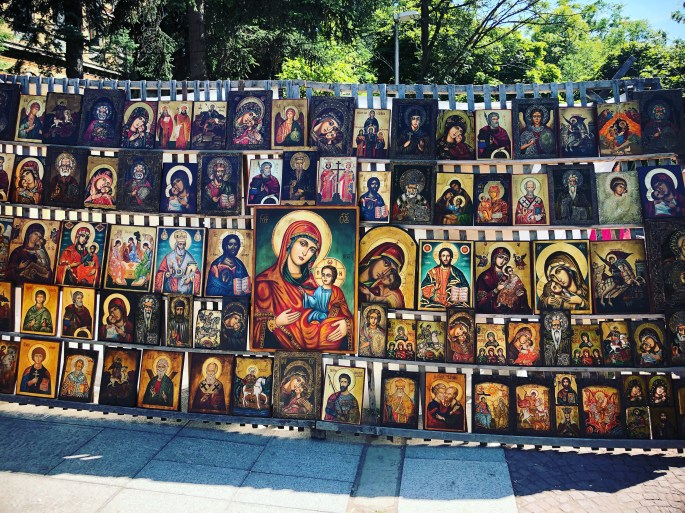
As I crossed the border from Bulgaria to Serbia, I soon learned that Serbians weren’t much different. Just more obstinate. They do things their own way, and don’t care who’s inconvenienced. It’s both inspiring and infuriating. Don’t get me wrong, they are a lively, welcoming, hospitable people, but the concept of inat is an integral part of Serbian culture. Inat is defined as “doing something precisely because you have been told you can’t; the acting out of proud defiance in the face of insurmountable odds.” In other words, cutting off your nose to spite your face. This could mean taking your sweet time to serve a customer who is in a rush and rudely demanding quick service. Or parking your car in the middle of the street, blocking all traffic and then getting in a screaming match or fist fight with anyone who dares challenge you for being so rude. Or, it could mean choosing to die rather than give up your faith to your conquerors. In truth, I’ve never been somewhere with more demanding, bossy waiters (thank goodness it wasn’t me in a rush). But I also was inspired again and again hearing the history behind this national trait, which translates to so much more than just “stubborn.”
Just as the Bulgarians experienced rule under the Ottomans, so did the Serbs. But instead of bending a knee and being privately obstinate, most Serbs chose to die rather than give up their Christian faith. The Serbs battled with the Ottomans under unwinnable odds, choosing to die on the battlefield and gain a kingdom in heaven instead of publicly converting as many other countries in the Balkans did. Walking through Belgrade, you can find a mural honoring Gavrilo Princip, the Serb who shot the heir to the Austro-Hungarian throne and essentially sparked the powder keg of World War I. The Serb point of view is not the Global II textbook view of him as a terrorist, but as a national hero who dared to stand up to those occupying Serbian land. In the nineties, when NATO was bombing what is now the former Yugoslavia, the Serbs carried on having BBQs and parties on rooftops, some even wearing shirts with targets on their backs. Crazy? Definitely. Stubborn? Absolutely. Admirable? Well, yeah. 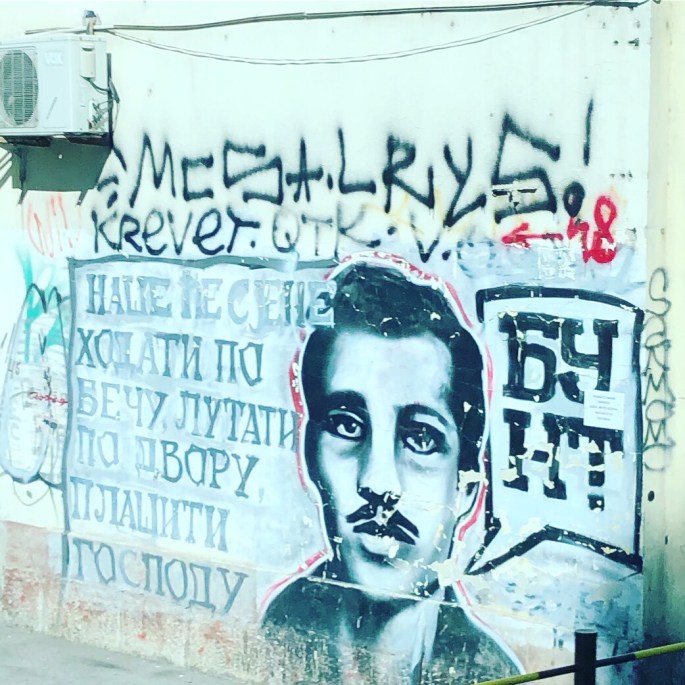
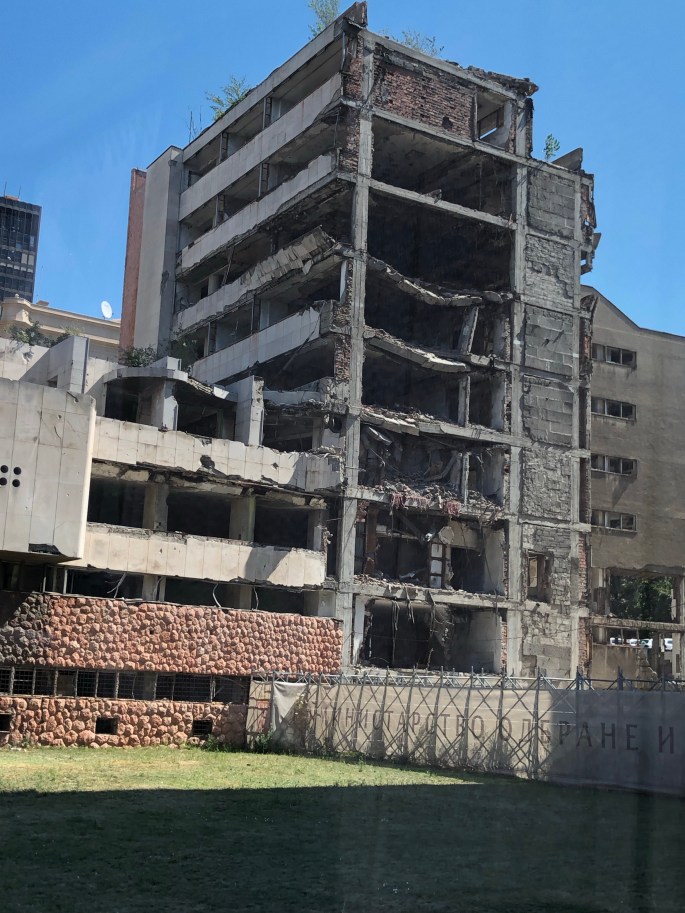
As views of open, rolling fields of sunflowers and grapes in Serbia slowly changed into winding, dark roads through the thick forests of Romania, I wondered if the people here held the same steadfast faith in the face of Ottoman rule, and, with its dense miles of spooky forest, I immediately understood why old Romanian tales spoke of strigoi, troubled souls who rose from the dead and drank human blood.
In fact, one of the most famous vampires of lore gained his reputation of superhuman strength from all the Ottomans he killed. They say that Vlad the Impaler carried a spear with him and would impale Ottoman Turks on them during battle, killing hundreds of men by himself, therefore gaining him notoriety in the ongoing battle for independence from Ottoman rule. Knowing this is what’s so odd – that Bram Stoker would take a renowned prince whose life goal was to defend Christian lands from Muslim conquerers, and morph his memory into that of a monster that good Romanian Christians feared.
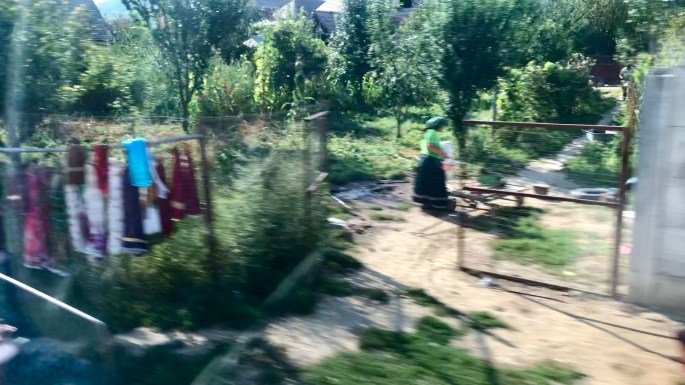
Regardless, Romanians today embrace their Draconian claim to fame, and in addition to pork dishes and Orthodox churches everywhere you turn, just the same as in Serbia and Bulgaria, you also get all the bloodsucker tchotchkes your heart could desire. Although I found Romanian culture to be a bit more tempered, clues to their own sense of determination and stubborn survival showed through. Case in point, the Roma. More colloquially known as “Gypsies” these people have faced severe persecution throughout generations and amid pressures to abandon their nomadic lifestyle, many have settled down and built homes on the periphery of villages throughout Romania. However, in a small gesture of opposition, they refuse to add curb appeal. Through a legal loophole, only houses with fully completed construction pay property taxes. So, the Roma build houses and settle, but not in the sense of the rest of the population. They never complete their houses, leaving the walls un-plastered and without windows or doors, only occupying a couple rooms in the entire structure. A subtle, stubborn, f-you to the society that has targeted them for so long. I couldn’t help but smile in appreciation.
One site we visited was the oldest school in Romania, where the priest showed us the first printing press in the country, along with religious texts from the 13th century. The craziest part of it all? He had discovered hundreds of documents and books hidden away in the attic of the church next door a couple years ago, underneath a moving plank. Someone, at some point, had refused to allow Romanian communist leaders to destroy everything, and so had found a spot so secret that only decades later was everything found, by mistake, when a construction crew came into the church to do repairs.
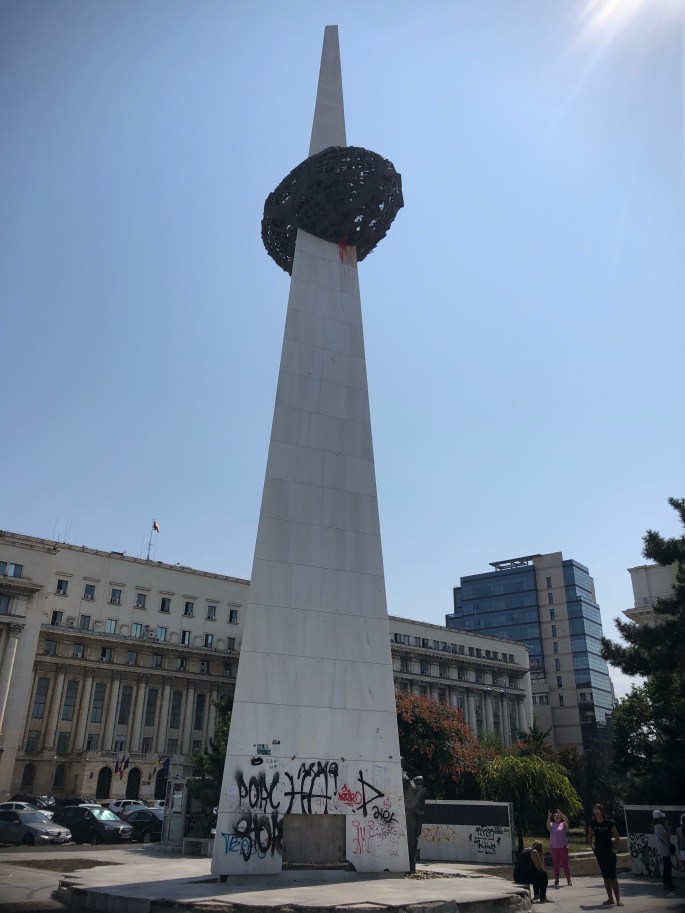
Entering the country’s capital, a city walk of Bucharest will show you graffiti still present from the December 1989 Romanian Revolution that overthrew communist rule. After being a satellite of the USSR since 1948, the people overthrew and executed Marxist leader Nicolae Ceaușescu, a despot who had secret police and controlled every aspect of society. He had deprived the Romanian people the most basic comforts of life, with little food on the shelves of stores as citizens died of starvation, while he poured money into building his enormous Parliament Building, a testament to his strength. As the Berlin Wall fell and students protested in Tiananmen Square, thousands of Romanians finally surged into Bucharest’s city center and revolted against the regime. Today, in Revolution Square, a memorial stands to commemorate the fall of one of Eastern Europe’s most brutal dictators. Apropos, perhaps, someone recently used a paintball gun to deface the statue, making its tip appear to be dripping blood.
What I found so inspiring as I traveled through the Balkans for the first time was that these people steadfastly held on to their identity, their culture, and their faith, through literally centuries of oppression and against seemingly insurmountable situations. My own life seems so small in comparison, but I admire the sense of self and stubbornness that allows these people to essentially say to invaders, regimes, and tourists alike, screw you, this is who we are and you can take it or leave it. Essentially, it has kept these countries united in the toughest times throughout their history, the same way it has protected me from friends who weren’t true friends and has helped me stay true to my own values and sense of self throughout the stages of my life.
So, the next time my family is annoyed with my stubbornness…I‘m just going to tell them to be thankful they’re dealing with me, and not a Balkan.
 Jill Came Tumbling After